Tharaka Invention Academy: Education Beyond School — Sample
🔗 This page supports a lesson in the ebook INNOVATE NOW: Mastering AI for Creative Problem Solving. Please refer to your copy of the book for full context.
🎧 Audio Only Soundtrack: “Tharaka Invention Academy: Education Beyond School”
Video Transcript
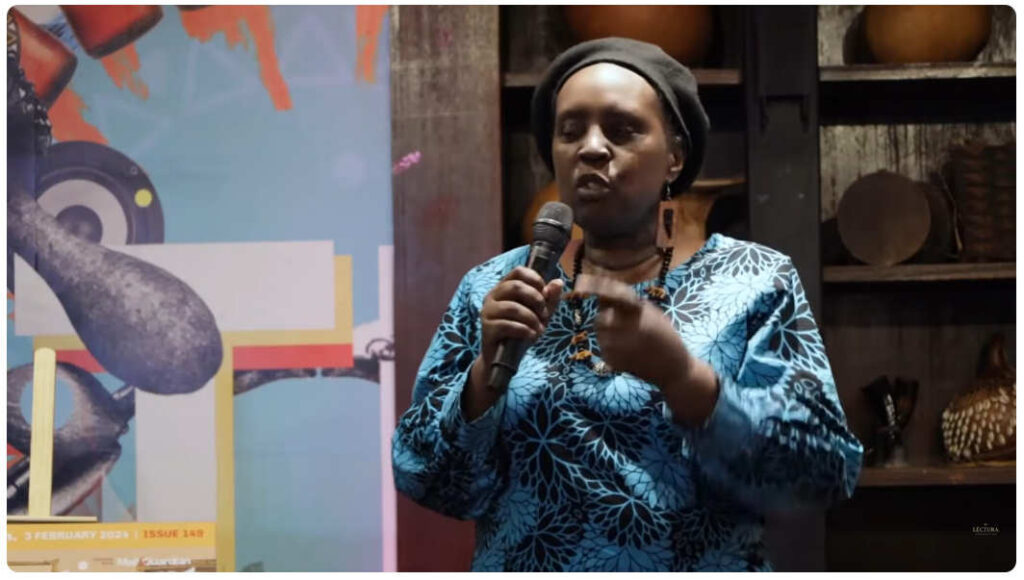
There is a lecture making the rounds about education in Kenya, and there is a lot in it that we at Tharaka Invention Academy with which we agree. The speaker makes a simple argument. Education is bigger than school. You learn when you read. You learn when you work. You learn when you make something, when you fail, when you meet other people, and when you stop to think about what has happened to you. We agree. In fact, that is where Tharaka Invention Academy starts. We do not believe education should be reduced to sitting in a classroom, collecting notes, passing an exam, and waiting for somebody to decide whether you are useful. That system has failed too many people.
But we also want to push the argument further because saying that the education system is broken is not enough. Many people already know it is broken. They feel it every day. The harder question is, what do we build instead? At Tharaka Invention Academy, our answer is that education should help a person think clearly, investigate a real problem, make something, test it, improve it, explain it, and contribute something useful. That means knowledge matters a lot. You cannot solve a serious problem with confidence and enthusiasm alone. You need to understand the problem. You need evidence. You need history. You need science. You need to know what other people have already tried and where they failed. Then you need to act. This is where we strongly agree with the speaker.
The argument that Africa needs practical skills instead of knowledge is a bad argument. You cannot separate the two so neatly. A person working on irrigation needs practical experience, yes, but that person may also need soil science, weather data, economics, design, local knowledge, and an understanding of how farmers actually behave. A person building software needs technical ability, but software that solves the wrong problem is still bad software. A person starting a business needs more than a motivational speech about entrepreneurship. They need to understand customers, costs, regulation, competition, and the real conditions of the market. Knowledge without action can become sterile. Action without knowledge can become expensive stupidity.
Tharaka Invention Academy brings the two together. A learner should be able to ask a serious question, research it, work with others, build something, and show the evidence of what they have learned. That evidence matters. For too long, we have treated the certificate as the final proof that somebody knows something, but a certificate often tells us very little. Show us the project. Show us the prototype. Show us the research. Show us the case study. Show us the product. Show us the analysis you published. Show us the contribution you made to a real problem. That is why we believe projects can become a new kind of transcript. This does not mean qualifications are useless. It means qualifications should not be the only proof that a human being is capable.
The speaker also makes an important point about innovation. She argues that people are often encouraged to become entrepreneurs, then punished the moment they try to make something real. We know this frustration. There is a lot of talk about innovation in Africa. There are conferences, launch events, policy documents, and photographs of people holding microphones. But invention is harder than talking about invention. An inventor needs room to experiment. They need time. They need access to other serious people. They need to know how to test an idea before spending money on it. They need to understand design, research, intellectual property, communication, and how to take criticism without collapsing. They also need permission to ask uncomfortable questions.
That is another place where we agree with the speaker. Education should help people interpret their own experience. A learner should be able to ask, “Why is this problem still here? Who benefits from the current arrangement? What evidence do we have? What assumptions are we making? What has already been tried? What can I test myself?” Those are educational questions. They are also innovation questions. Tharaka Invention Academy was built around that kind of learning. You start with a real problem. You investigate it. You learn what you need. You use tools where they help. You work with other people. You test your thinking. Then you make something. Sometimes it works, sometimes it does not. Good. Now you have something to learn from.
We also agree with the speaker that learning is social. People learn badly in isolation. Yes, you can read alone, you can watch a video alone, you can work through a lesson alone, but serious learning changes when you have to explain your thinking to another person. A weak idea becomes obvious very quickly when someone asks, “Why?” A strong idea becomes better when someone says, “Have you considered this?” That is why Tharaka Invention Academy is built around collaborative learning, projects, and communities of people trying to solve real problems.
But there is one place where we would challenge the speaker. There is a danger in making the state the main character in every story about education. The state matters. Policy matters. History matters. Power matters. But people also need agency. A broken system can explain why your path is difficult. It cannot be allowed to become the reason you stop thinking, learning, or making. You may not control the curriculum. You can still study beyond it. You may not control the economy. You can still investigate a real problem in your community. You may not have a laboratory. You can still document, interview, compare, prototype, test, and publish. You may not have a powerful title. You can still become useful.
That does not excuse bad policy. It does not excuse corruption. It does not excuse institutions that waste talent. It means we should fight on two fronts. We should demand better systems, and while we are doing that, we should build people who can think and act without waiting for permission.
That is the difference we are trying to make at Tharaka Invention Academy. We are not telling young people, “Forget knowledge and go start a business.” That advice is lazy. We are saying learn deeply enough to understand a problem, think clearly enough to challenge assumptions, work seriously enough to make something, and honestly enough to test whether it works. Then show the evidence. Education should leave you more capable than it found you, more able to think, more able to make, more able to work with other people, more able to see through nonsense, and more able to contribute. That is the education we are trying to build
💡 Tip: You can watch the video, or—if you are on the move or have limited data—listen to the audio version instead. When ready, open the embedded document for deeper understanding.
🔙 Return to your ebook to continue your learning journey.
📚 This page is part of the Tharaka Invention Academy Learning Library.
Content provided for independent study by learners pursuing innovation, invention, and creative problem-solving mindsets, skills, and knowledge.
“I decided to call my lecture “So Many Vijana.” Um, it’s inspired by that song.
All right. [Laughter] [Music]
How many of us believe that the government is sincerely interested in us getting an education? Just anyone?
Okay. For me, I grew up in the old system, the 7-2-6-3. No, 7-4-2-3. I was in the last year of that system, and when we were going to school, we were told we were going to be leaders of tomorrow. I really believed it, like sincerely. Um, but that was partly because in our days there were not as many people going to school, so you could see visibly the difference that going to school made.
When I finished my Standard Seven, quite a number of my classmates didn’t get into high school. So it was very visible that schooling is your lifeline. So I grew up believing that they wanted us to go to school.
But now, when CBC started, I’ve been making noise about it. When CBC started and I started asking questions, I realised, yeah, these people don’t really care. That was quite traumatising to me, I must say. So it took me a while to now recalibrate and figure out: Why does the system look the way it does?
So I’ve just asked you whether the government wants you to have an education, and I’ll tell you the games that have been being played with education since 1895.
All right. But we can start with: What is education?
For me, I have started to say that it’s a social act of creating, expanding and passing down knowledge. So there are at least four ingredients, for me, for education.
One is that we must gather. We must be together. And even when you’re reading books, for example, you’re still conversing with somebody. Somebody has written a book, and you’re absorbing the material they have written.
I think work is very important for education. We need to work because whatever we learn as we work becomes a form of education. And that’s why I have those women there, to show that this is a form of education. When they sell, when they meet customers, they start to know things about society, about people’s preferences, all that. So it’s a kind of education.
Then education also includes our lived experience. So as we go through life, we start to, we get educated. And the last part, which is connected to life, is that we must process what we learn.
I don’t know if you’ve noticed, in this Kenya, if you try to interpret your experience, you get a backlash. We are supposed to just live and expect the media, the church and the school system to tell us what is happening to us. We are not allowed to absorb it and think: What has just happened? What does it mean? Where can I get my answers?
That is actually the purpose of the school, to ensure that you don’t do that kind of work independently. So you can see I’ve talked about emotional processing, spiritual processing and intellectual processing. All that is part of education.
So one of the things in Kenya I have noticed, especially after I started talking about CBC, is that our education is sabotaged. So whenever we meet, there’ll be people. I’m sure even NIS is here. Hi, NIS, wherever you are. I know you’re here.
Okay. So they sabotage meetings. And in fact, I make fun. There’s a verse in the Bible about where two or three are gathered in my name. Even in Kenya, wherever two or three people are gathered, the state will be there.
And they do it through different things. You will always have, even in family meetings, you will always have the person who acts like the chief, who is ordering you around. There’ll always be the activist trying to say, “No, that’s not how things are done.” There’ll be a pastor looking to start a church.
Those of you who are in Christian circles, a lot of pastors, when they see people gathering like this, they see a potential church. And then we have marketers. Marketers really love meetings like this.
So there’s a way in which our meetings are so controlled. And if they are not controlled by those people, the police will be there, and our visitors today.
Um, then there’s also control of space for people to meet and talk and educate. We must have spaces where we can meet. Now you know what’s happening to Karura Forest. You know what’s happening to the parks. Uhuru Park has been enclosed. I hear they’ve even now started telling people to pay.
I live near Machakos. The Machakos People’s Park has been run down. So playgrounds are grabbed. You know, playgrounds are where kids play, and play is a form of education. The kids learn how to manage their emotions. They learn how to play with each other, to follow rules. Those spaces are being taken.
So space, the management of space, is a part of the sabotage of education. So is movement. We are curtailed in movement, either by lack of transport or very abusive transport, as we know with the so-called matatu culture. We don’t have rail that can make us move from place to place easily.
So movement is curtailed so that people don’t meet and share ideas.
Access to information is a big, big problem in Kenya. We are not told anything, especially by the state. You literally have to beg, shout, you know, harass them to give you information. And up to now, we don’t have a lot of information that we need to know for ourselves.
Like, I think this Ebola thing was not going to be announced. It’s only that Trump can’t keep quiet, and he had to show that he was doing something. So we discovered that way. I don’t think the government was going to tell us.
Um, there’s also the sabotage of skilled and innovative work. I know you blame us, the teachers, for not giving you skills, but real skill comes from repeated work. And Kenya, and I’ll explain that later, Kenya does not allow innovative work. There are so many ways in which it sabotages work.
But my friend who was here last time, he says, and I think this is true, if you want to import beverages, for example, you will get the licences, you will get the support, you will not run into any obstacles. But if you decide to manufacture those drinks, I tell you, the government will come for you. KRA will come for you. County government will come for you.
In fact, there was a meeting I was at with some innovators, and we were told a story of how this guy invented a prototype. It was announced in the media, and within a few days he got two messages. One was from KRA calling to say, “We are coming to see if you’re paying tax,” and the other one was from the MP, who said, “If you develop this thing, I’ll deal with you.”
So that’s how innovative work is in Kenya. The more you know, the more you’re put in places where you cannot use your knowledge. That’s what happens.
So most of you don’t look my age. Wait until you reach my age. You see how Kenya operates. You’ll be such an expert, but nobody will care for your expertise. That’s how it works.
And then another sabotage is, like I said, we’re not allowed to process what we experience. So if you experience something and you start to interpret, people tell you, you know, “Let’s be positive.” You know, there are all these lines that Kenyans do. “Let’s be positive.” “That’s your opinion.”
You know, there are so many things we say to prevent people from analysing what they have experienced. So that’s a sabotage of education that has an implication for the school system.
So what is school for, in my opinion?
And our friend George Carlin, he’s an American comedian, there’s a video which I encourage you to watch. This is what he says: that they want people who are just smart enough to run the system, but dumb enough to passively accept it.
So the school system is supposed to give you knowledge up to a part. After that, you’re not supposed to go beyond. And what’s the beyond? The beyond is analysis and information.
You know, if you can do the things eight to five, if you can do the technical part, that’s fine. You will be allowed to excel. But when you start to say, “Let me innovate,” now that becomes a problem.
You’ll be told, “You are not following instructions. That’s not what you were told to do. You’re refusing to listen to me.”
And if you really think about your high school experience, a lot of the people the teachers hated were the innovative ones, the ones who used to think and ask questions. I don’t know if you noticed that. Because you’re supposed to just accept what you’re told and do the exam and stop disturbing the teacher because TSC has asked for results.
So you need to keep that in mind. It’s not that they don’t want us to know anything, but they don’t want us to know anything beyond a certain point. There’s a ceiling. And you will see, when now I go through the history of the school system, you’ll see what I’m talking about.
So how do they make us accept this system, or how do they dupe us?
One is that they tell us we need practical skills and not knowledge. This was what they said about CBC, which was, to me, very shocking. But Kenyans were not shocked. I don’t know why.
We were told we need entrepreneurs, not job seekers. And who are the people who are telling you? It’s civil servants who have been employed for the last three decades. They are the ones telling you to make employment.
The other one we were told, which was very, very deceptive, was that there’s a problem with rote learning.
Now, cramming for exams is not rote learning. Please, they’re not the same thing.
Rote learning is what you do with your children. For example, every time a child receives something from a grown-up, you see parents saying, “And what do you say?” Then the child says, “Thank you.”
That’s rote learning, because every time you ask that question, that’s the answer the child gives. That’s a form of rote learning, and children cannot do without rote learning.
The other day, no, it wasn’t the other day, but about two years ago, I went to my dad. I asked him, “Please give me the line, our lineage. Who are your parents, your grandparents, your great-grandparents?” Like that. And he made a whole chart.
I haven’t crammed it, but those are the things people used to learn through rote learning. That’s how you learn.
Rote learning is what helps you learn your mathematical tables so that you don’t need to look for a calculator. When you’re asked for two dozen eggs, you calculate it quickly in your mind. It’s 24. That’s what rote learning is.
And we were cheated that that is a bad thing. It is not a bad thing.
All right. We were told that we are undereducated or uneducated. I’ve heard people saying our problem is not lack of education, it’s miseducation.
No, we are not educated enough. That’s one of our problems.
We have also been told that Africans are emotional and instinctual. Every time I start to explain something, somebody will tell me something like, “Oh, you know me, I’m not academic.”
Mama Mboga doesn’t need academic formulas. That’s a lie. Mama Mboga also needs to think because she’s in a system. She’s in a system that affects her livelihood.
We can’t keep on doing this, saying that Wanjiku won’t understand the Constitution, which is what Moi said, that why are we talking about the Constitution? Wanjiku doesn’t need to understand.
And then we’re also told that the problem with school is that it teaches everybody the same thing.
Now, I am standing here talking to all of you. I am not coming one by one to find out, “What are your special needs? You know, what do you need to know?”
There is room for group learning. We do it with the media. We do it with the church. We do it anywhere where people meet. This is group learning.
And yet we were cheated that that is necessarily a bad thing, that that’s a problem with the school. That was a lie. It was a lie that really sold well.
And then we are also told that school teaches us to competently cite European history and not African history.
Now, I teach, my training is in French. So I can tell you about, what is that guy? Napoleon. I can tell you about the French Revolution. I can tell you all this.
But I can also tell you about Sankara, about Senghor. I can tell you about how France engineered independence.
So if you tell me I should not learn European history, I think that’s a lie. I should learn it, but I should also learn African history. I have to learn all of them.
And you’re going to see, when I start talking about our school system, that it’s global actors who have influenced the way the school looks like now. We can’t afford to ignore what is happening in the world.
And, you know, even I ask my students, “Do you know X? Do you know Y?” They don’t know.
My students didn’t know that colonialism was about land. Imagine. Some had never heard of Dedan Kimathi.
Yeah. So there’s a real, real problem. And I think it was mentioned in class, but it just went over the head.
Okay. So what’s the colonial version of those myths we were told to accept?
One is that Africans will get misleading ideas.
Now, the strange thing about our history of education, which I still haven’t figured out how to deal with, is that Africans actually asked for the schools.
Because what was happening is that Kenya High, Loreto Girls and Nairobi School, which was called Prince of Wales, those schools were high schools for the settlers. So the settlers from Eldoret, even up to Uganda and from the Coast, were sending their children to those schools.
But what were the schools the Africans were getting?
The Africans were getting schools from the missionaries. And the missionaries were giving two things.
One is religion, religious education. So they would go to school and sing choruses the whole day.
And the other one was technical education.
In fact, I always cringe when people talk about technical education because technical education, at least as the missionaries saw it, it was about hygiene, about sweeping your compound. That’s the technical education. About doing carpentry and cooking. That’s the technical education.
It’s not what you think.
And when I start talking about this, this is the kind of thing that is told in the Kenyan space. People hear technical education, they think industry, cars, Mercedes-Benz, German technology.
No. That’s not what they are talking about. They’re talking about baking and beadwork. That’s what they are talking about.
Okay. So because of that, the Africans said, “We don’t want missionary education. It’s too much religion, and we are seeing that this education is not being done by Wazungu. Wazungu are doing academic education. Why are we doing religious education? We want schools like theirs. We want schools that are funded by the government, not by the church.”
And the settlers said, “Heck no.”
And the settlers were very powerful. They were the ones in the LegCo, which was the legislature. They would campaign against Africans getting an education.
And the reason was simple. They had grabbed land, they were farming and they needed people to work on the land. And they were saying if Africans get education, they are not going to work on the farm.
So you can see my second point there, that education will discourage Africans from work on settler farms.
So when you hear KICD or the Ministry of Education saying we don’t need knowledge, that’s what they are saying.
They’re not saying that, oh, you’re not effective or anything. What they are saying is, especially 8-4-4, please, those who did 8-4-4, the government doesn’t like you because you all went to school when you shouldn’t have gone to school.
The other system was extremely exclusive. What are you doing in high school? What are you doing in the university? They didn’t want you there.
So now they’re cutting back on the education because, look at you, 8-4-4s. You are on the streets since June in 2024. They don’t want you going to school.
And it’s the same mindset of the settlers. If Africans get education, they’ll refuse to accept what we tell them.
The other thing that was said about Africans is that our brain capacity cannot accommodate knowledge, that our brains stop growing at the age of 13. That’s what they said.
So that’s why they said, “Let’s not disturb Africans with academic education because their brains can’t manage it.”
And you can see the last point is Africans cannot grasp abstract thought.
So, oh, you people, mathematics is too much. Architecture, what do you mean? Your mind can’t absorb that.
And when you think of what we were being told about CBC, it was the same thing.
There was the PS of Education who said that mathematics will confuse students who do the arts. Yes, he said that.
And yet a lot of mathematicians are philosophers. It makes sense. A lot of people in music also do a lot of physics.
The people who man this here, you have to have an aesthetic ear, but you also must be able to engineer the sound with the mics. So these knowledges come together.
But with CBC, we were told that, oh no, let’s have a separate pathway, and if we give mathematics to the people in humanities, it will confuse them. He actually said that.
So what is the reality?
The reality is that practical skills come from knowledge, and they build knowledge. The more we work practically, the more knowledge we get. That’s how life is. You cannot separate knowledge and skills.
So that line we’ve been told is really, really damaging us.
There was a student, a master’s student, I tell you. Hey, Kenyans.
I told my students to write what they think about a certain article, and this is a master’s class. I said, “Read this article and give me your opinion.”
The student went, copy-pasted, brought it back.
And I had told them, “I will talk to each one of you about the assignment you send.”
So now I confronted her and said, “What you’ve given me is not what you think. It’s what you got from the internet.”
So she said, “Oh, I thought schools don’t teach practical things, so I wasn’t going to do the practical work.”
I mean, that’s how confused we have become about this idea of practical.
My students don’t know how to format a document in Microsoft Word. I’m talking about undergraduates about to graduate, fourth years heading to the workplace.
Why don’t they know?
“University is not for practical knowledge.”
You see, they divorce. Even when they send us their assignments, in their minds, this is not practical.
So we really need to rethink this idea of practical.
Okay. So we’re also told our economy, the reality is that our economy does not allow entrepreneurship.
Like I said, if you want to be an entrepreneur, KRA comes for you.
The TVET people, there’s this animal called Small and Medium Enterprise Authority or something like that. They’ll come for you and make your life a living hell in the name of helping you.
Learning, I’ve already said, is a necessary part of learning.
African cultures do have philosophy and abstract thought.
Communal learning is inevitable. Like I said, we are here as a community.
And we need to know the history of the world.
And you are going to see, when I start talking about our education system, how our education system is also heavily influenced by education for Black Americans. And I’ll explain why.
And then Kenyans, a lot of Kenyans lack historical intelligence. We don’t have this idea that things started somewhere.
And that’s because we’ve been told history is Vasco da Gama.
You check, it’s on the president’s Twitter handle. He said history is Vasco. Knowing when Vasco da Gama came to Malindi cannot build sewers or fix taps.
So because of that, we tend to lack historical intelligence.
So, like for example, when Macron was here, you know, the Kenya government was behaving like there was no problem in the Sahel. You know, because they are so immediate. They just can’t remember what happened a year ago.
So that’s how we operate in Kenya.
So what am I saying?
I’m saying we are given a lot of bullshit, basically, about the education system.
The education system pretends to offer education, but it increases the obstacles to that education.
That’s what happened with CBC.
Everyone was focusing on, oh, pathways or this or the other, but we were not realising that after JSS, and I warned, after JSS there will be people who will fall off the cliff.
And I hear the numbers are in, about 200,000. About 200,000 kids have not been able to progress beyond JSS.
That’s by design. It’s not a mistake.
So what happens is that what you’re told in the media or what you’re told in the school sounds like flowers, but in reality they are pulling the rug under your feet.
That’s what happens with education.
Now, why am I saying bullshit is different from lies?
With lies, if I want to lie to you, it is because I know the truth and I don’t want you to also know the truth. So I lie to you.
Bullshit is different. Bullshit is when I don’t care what the truth is. I just want you to follow what I’m saying.
So if I say, for example, I am selling this bracelet, “You will buy this bracelet. Kenya will be saved.”
I don’t really care about Kenya. That’s not my concern. My concern is that you buy the bracelet.
So I don’t care whether it’s true. I mean, it doesn’t matter whether you tell me I’m lying. It doesn’t matter.
What matters is that you buy the bracelet.
The other thing about bullshit is that it is when we say things that we don’t have enough knowledge of.
And CBC, those guys bullshitted you. I’m sorry, they did.
They could not answer basic questions about that system.
And in fact, by 2018 I was asking, “Where is the curriculum which outlines what you guys are doing?”
I was told, “No, we are experts.”
That’s what I was told, and it’s there. So you can check on YouTube.
They actually didn’t know what they were doing. They couldn’t answer my questions, but they had to talk as if they know.
So that’s BS.
It’s also a concern about how we sound. We are more concerned about whether you believe us, whether we sound educated.
And I’m telling you, professors in Kenya, and I’m putting myself there, we really know how to bullshit.
We talk up there, big things. But if you really, really ask, we are not saying anything.
That’s what happens.
Okay. So why do we do this?
We do this because if we tell you we are not giving you education, you will look for it elsewhere.
Which is what happened in the 1920s, when the settlers were saying, “No, Africans should…” Africans were like, “Okay, sawa, we’ll start our schools.”
They don’t want that.
They want you to believe that the school is the only place to get an education. So that’s why they have to pretend they are giving it to you.
They also need to keep their power.
You see, there’s a way we surrender our power over knowledge when it comes to the school.
And this really irritates me because my students keep quiet in class. They think I’m so knowledgeable.
And in fact, these days, sorry to say, sometimes I’m just like, “I’m going to bullshit here because they’re not going to ask me anything.”
They don’t ask.
And that has changed. It was not always like that. This is something that started, I noticed the change after COVID. So it hasn’t always been like that.
It’s also to keep using our skills to prop up the system.
So we are always helping the government correct itself with our skills.
And that’s actually what I realised when I started talking about CBC.
I would say, “Okay, you people are talking about parental involvement. Where is the document giving us guidelines?”
Then two weeks later, I see guidelines on the KICD website.
I started realising, “No, I’m doing KICD’s work. I cannot do this.”
So that’s how our skills are used to prop up the system.
They also have to keep cheating us that they believe that they’re interested in our development.
No, they’re not.
And to distract us from seeing the obstacles.
So all this BS you were told about, “Oh, exam obsession is about to end,” what else were you promised? “Individual attention.” “You’ll be using the internet.” “Digital skills.”
All that was BS. It was to distract you from the obstacles.
And unfortunately, I kept talking about the obstacles.
I asked, “What happens to kids whose parents are not educated?”
You know, if you’re saying that they have to do the homework, what are you saying?
Those kinds of questions.
Um, anyway, I can talk about CBC till the cows come home.
So the story of our education has been these games.
Africans ask for this, then the colonialists give in to pressure, but behind the scenes they’re undermining the school system.
So, for example, I’ve already explained, the settlers didn’t want education for Africans.
They said if you give Africans education, they will not work in the shambas.
Missionaries wanted a bit, just a bit, for you to read the Bible, and that’s it.
The colonial administration didn’t care whether Africans got an education or not.
It was only now in the 1920s, when people like Senior Chief Koinange started saying, “We want high schools. We are tired of just going to primary school.”
And the pressure was so high.
And then they had that clash they had over FGM, so the colonialists realised, “Hey, we better give these people schools or it’s going to be a problem.”
So that’s when now the colonialists said, “Okay, the Africans can have schools.”
But you see the “but.” They are not saying the “but.”
Behind the scenes was, “We will now have exams.”
So that’s why exams were introduced, to reduce the number of people who qualify to go to high school.
We will now have exams.
We will also, I’ll come to that later, but they started closing their independent schools, all that.
So on one hand they are telling people, “Yes, we are increasing the schools,” but behind the scenes they are limiting the growth of Africans through the school system.
And of course Africans were saying, “This is not what we want.”
We want a literary education like the one you’re giving the Europeans.
We want a secular education.
We don’t want it run by missionaries.
And the reason was simple.
They saw that as access to wage employment.
So they wanted to be employed, and they realised the people who get employment are the ones who got a literary education.
So now I’ll talk about the commissions.
1909, Fraser.
He was a professor working in India. He came to Kenya, and the main thing from that report was that education should be segregated.
So Europeans, Asians and Africans all had different curricula.
They all had different curricula and different content, different exams.
So the exam before CPE was called KAPE, Kenya African Preliminary Examination.
It was only for Africans.
1924, because Africans are demanding education, the colonialists start the Local Native Councils.
So this is where tribalism is also enhanced because the Native Councils were all tribal.
So there were councils in Kiambu, in Nyeri, I think in Murang’a, in Western, in Kisumu like that, and then at the Coast.
And actually, this is how they start discriminating and perpetuating inequality in education because the LNCs, like in the Coast, did not get as much support as the ones in Kiambu.
And the ones in Kiambu, the reason was simple, that because the settlers had taken the land, they needed to pacify people with education.
So the Phelps-Stokes Commission comes in 1925.
I don’t know if you’ve heard of Booker T. Washington and W.E.B. Du Bois.
There was a debate after slaves were emancipated in 1865 in the US.
There was a debate: What kind of education should these people get?
And guess what they said? TVET.
We need TVET.
They don’t need academic knowledge because we don’t want them fighting for their rights.
And Du Bois is the one who said, “That’s ridiculous. We need to understand ourselves as citizens so we can demand our rights in the US.”
So the robber barons of the US wanted to spread this kind of ideology throughout the settler colonies.
So they came to Kenya, they went to Tanzania, to Zimbabwe and to South Africa.
And the idea was, “Now we found the formula for educating Africans who are close to white people.”
So no literary education, no arts, and only technical skills.
That’s a way to keep them down.
In South Africa it was called Bantu Education.
So 1925, that’s when they come here.
And by the way, even CBC was… I’ll come to that.
Anyway, 1926. Why have I put Alliance High School here? I hope there are alumni here.
Okay.
The reason Alliance started in 1926, it was the missionaries who started it, and they started it to deflate the African demand for high schools.
So in Kiambu, the KCA had raised enough money to start a high school, and they were starting a college in Githunguri.
And now they were saying, because they needed permission from the colonialists to start the school, they were now saying, “We are going to build a high school.”
So the missionaries were the ones who represented African interests at the LegCo.
So they made sure that they legislated in a way that Africans couldn’t start their own schools.
But then they now quickly started Alliance High School to deflate the clamour for schools among Africans.
So remember I said, you promise one thing and you take away another.
And in fact, after Alliance High School was started, the missionaries started saying, “Well, instead of you taking this money to African schools, bring the money to us, to Alliance.”
So that’s how those are the games they were playing.
That’s why I put Alliance High School there.
It was the first high school built for Africans, but it started off as a technical training school.
It only started offering Cambridge Certificate in 1940 when Carey Francis went to the school.
The Beecher Report, this one I was so shocked.
I’ve been reading a lot of history. I hope it’s obvious.
Beecher was an Anglican clergy. He had taught at Alliance, and now he had become, I think, now he was a bishop of somewhere.
And because the Africans were building more and more schools, and these schools were called independent because the Africans realised, “These Wazungu are playing games with us. Every time we try to start schools they start giving us stories like Alliance. So we’re still going to build our schools anyway.”
And the government was starting to get worried because those schools were so popular.
They were popular.
And what is interesting is that the curriculum was not that different from the missionary schools.
It’s just the fact that Africans are teaching that was making the colonialists nervous because when Africans are teaching, they will also add their own content, their own emphasis, their own culture, like that.
So in 1948, they decided to appoint this commission to look at the problem of independent schools.
And the report was crafty again.
What they said is, “Yes, we are going to increase the number of high schools for Africans, but they have to do this exam, and the independent schools have to be subjected to inspection.”
Inspection from British educators who will be imported from Britain.
So the money which should have been going to schools would go to inspectors.
And then they were saying that the independent schools should eventually be shut down because they are not quality.
So you see, they are promising more high school opportunities for Africans, but behind the scenes they are doing these games of saying, “Oh, you must be inspected. If you’re not funded by the government, we shut you down,” like that.
And again Africans smelled a rat.
They knew they were being tricked.
And in fact, when the Mau Mau things started, around that time, one of the things people swore was that, “I will not implement the Beecher Report.”
It was that serious.
They were so angry because they said, “You’re basically saying you’re going to shut down our schools.”
So when the resistance starts in October, the government uses the Emergency law to close down the schools.
So there were no more independent schools that were open.
And in fact, a lot of teachers in the missionary school died during the resistance.
Okay.
So this is what you need to remember about the Mau Mau era, which I did not know until, is this last year?
There was a two-pronged approach to crushing the Mau Mau by the British.
There was the open military one, where they are going to the forest, bombing and killing the resistors.
But there was another subtle war that was going on.
And one was to increase the amount of education so that they co-opt more Africans who accept British civilisation and capitalism as a system that needs to go on.
So there were two things going on at the same time.
You need to remember that because now, when I start talking about Starehe, you’ll get where I’m coming from.
Okay?
So remember, there’s the war in the forest, but there’s also the counterinsurgency in education, increasing the number of Africans who go to British schools, British education schools.
So now that the settlers had sort of, they were starting to lose the battle against African education, in 1956 now they open a university for Africans.
Why is this happening?
Because the few Africans who had gone to high school were now going to Makerere, and when they couldn’t get university education in Kenya, they would go to countries like India, they went to Pakistan.
And of course, the thing that made the West shiver the most was that people were getting scholarships to go to Russia, the Soviet Union.
They couldn’t have that.
So they realised, “We better provide university education which we can control.”
But the settlers were still very powerful.
So they said, “No, we don’t want university education for Africans. We don’t want degrees. We don’t want liberal arts. What we want is TVET, higher diploma TVET.”
And that’s why University of Nairobi started as the Royal Technical College.
It was not meant to give degrees.
And in fact, it was meant to be mainly for the settlers.
And then you, an African, if you really insisted on getting a degree, you would have to go to Makerere.
And of course they knew that would work because the costs are increased by the fact that somebody has to go to Uganda and get an education.
So the University of Nairobi started as the Royal Technical College.
It also started because the Asian community in Kenya was also saying, “We want a university.”
And they said they had raised funds to give to the university.
I think those of you who are at University of Nairobi, you know there’s the Gandhi, I think Gandhi Memorial, something.
That was because the Asians who raised money were raising it in memory of Gandhi.
So they were saying, “We want to start a university with degrees, and here is the money.”
So the British were like, “Yeah, yeah, yeah.”
That money disappeared.
It was a lot of money.
I think it was like 20,000, which is a lot for the time.
Okay.
So 1957 is when now most of the top schools started offering high school education.
Can you imagine?
The Masenos, the Mang’us, the Kagumos, Loreto, Loreto Girls, that’s when they start high school education.
Imagine that.
And they were just about 10 in 1957.
They were only 10.
That’s how scarce education was.
Um, but also remember I said there’s the Mau Mau war and there’s a counterinsurgency.
So by 1957, the British realised that politics is a problem.
We need more Africans in the LegCo.
Remember I said before the Africans were in the LNC, the Local Native Councils, which were tribal.
But now the LegCo, where the settlers sat, now they said, “Let’s incorporate more Africans into the LegCo.”
So the first elections to incorporate Africans was in 1957.
And this is part of why Alliance has the name it has.
It is because about six out of the eight Africans who joined the LegCo, Moi included, about six of them were from Alliance.
So you can see, now, because I’m going to get to the political economy, you can see why education now started becoming important.
Because to even get elected, the British said you had to do an English test.
And that English test was still there. I don’t know if it’s still there, but it’s been there for a long time.
And if you came from Central, you had to have a loyalty certificate.
So, yeah, you go to the DC and say, “I am loyal.”
And even that was not enough.
The DC had to ask, “Have you ever suffered because of the Mau Mau?”
If you had not, you did not qualify to vote or to stand for elections.
So you can see the education system is starting to influence our politics through that.
Okay. 1958.
Now 1957, I said more high schools were now doing O-level.
They sneak in A-level in the next year.
And why?
So that students cannot go direct from high school to university.
That was the trick.
Add two more years, and then now you prevent the kids who had joined the high schools, now you prevent them from entering university.
You tell them, “No, you have to compete for A-level first before we allow you in.”
All right.
Then I’ve put there Starehe Centre. Pole sana if you are an alumnus.
But Starehe Boys’ Centre is a very interesting case because it started as a rehabilitation centre for Mau Mau.
People didn’t know.
Griffin used to work as an information officer, whatever that means, if you know how information was extracted from the Mau Mau.
So he gets tired. Let me just be nice because I hear Starehe alumni get upset when you talk about it.
Um, so he quit when his contract was over. He quits and he joins this rehabilitation department.
There was a rehabilitation department that was supposed to rehabilitate Mau Mau.
I don’t know if you heard about it.
The Mau Mau, once they were arrested, they had to go through a pipeline.
Caroline Elkins has talked about this.
You go through a pipeline.
If you’re considered grey or black, it means you need to be reformed.
And reformed means you have to be taught by the priest.
You have to confess your sins and show that you have changed, and then go to a TVET, and then go to a TVET to get some skills.
And that is now proof that you have changed.
So that’s what Griffin was assigned to do.
He went to Athi River, I think, and then while he was with the boys there, he said, “Let me start a high school.”
So he comes to Nairobi with two of the former students of his rehabilitation camp.
They come to Starehe.
Starehe is interesting because during the Mau Mau insurgency, the British used to broadcast. They would broadcast news about how they are winning the war against the Mau Mau.
There was a big speaker there.
And because it was a populated area, they are broadcasting how they, so they, I think there was a DC who had a station there.
So when he starts the concentration camp, eventually it becomes a school.
So that’s why I have put it there, because that’s now where the two marry, the counterinsurgency and the school system.
Okay.
And then 1960.
By 1960, the Europeans are starting to accept, “We have to leave Kenya. This thing is too hot. We better leave.”
So they have a Lancaster conference where now they invite the politicians to come and negotiate for independence.
I am mentioning this because of Africanisation.
Africanisation is the problem of our school system.
But I will now go to our dear first president, Baba wa Taifa.
But before he becomes president, the University of East Africa is established.
Remember I was talking about the games the British are playing.
They have accepted that we are going to have a university, but they say, “Let us split the university into three.”
So if you wanted to do medicine, you went to Makerere.
If you wanted to do engineering, you went to Nairobi.
If you wanted to do law, you went to Dar es Salaam.
And it’s deliberate.
It’s so that the students never meet.
It’s so that you increase the cost of education.
So on paper, they are saying, “Yes, we are supporting higher education,” but in reality, they are splitting it up.
So now, remember Africanisation.
What is the problem with Africanisation?
All the British civil servants who are now leaving have to be replaced by Africans.
And this is now where “So Many Vijana” becomes extremely important because people realise that education gets you a job in the independence government.
And mark you, that’s the other problem.
Africans were receiving the salaries that the Europeans received.
So that’s why we still have a very high wage bill.
So when you’re Africanising the system and saying every post must have an African to replace it, you’re raising the appetite for education.
So that’s where it came from.
And the people who joined the system at that time, people like Duncan Ndegwa, who ended up in the Central Bank, Philip Ndegwa, Jeremiah Kiereini, all those people were the ones who were trained by the British in the early 60s to now join the government.
Okay.
So Jaramogi Oginga Odinga realises there’s a problem, that these civil servants think like Wazungu.
We need to retrain them.
So he asks for Lumumba Institute to be built so that they can retrain the civil servants.
The Americans and the British got scared.
So it was closed down within two months.
Okay.
So Jaramogi eventually realises that the whole system is stacked against him.
So he forms KPU.
And then the first exams written by Africans, which were administered by an African exam council, were in 1967.
In fact, your precious government of Kenya said they didn’t want local exams because British exams are objective.
They have international weight, so let’s stick with Cambridge.
But under the East African Federation, they couldn’t do that.
So that’s the first time now we start having exams set by Africans.
KPU was banned in 1969.
The East African University collapses in 1970.
But the majority of the staff are still European.
And in fact, in 1971 or 1972, the students of architecture went on strike because they said, “These Europeans don’t want us to pass. They are going to fail us in exams, so we are not going to sit the exams.”
And then the rest of the school, the students of UON, joined them.
And then the police showed up and beat people just the way they do today.
But guess who was in charge of the Nairobi police?
A guy called Miles Oswald, still from the colonial times.
He was still running the police in 1970.
In 1971, Ndegwa Commission.
Mark that.
Why is that important?
That’s the guy who said civil servants are allowed to trade with the government.
That’s where it starts.
Okay.
1978, Kenyatta dies.
Now, Kenyatta’s view of university education was that it’s for civil servants.
It’s for training civil servants.
So the universities never increased under him.
When Moi comes, he realises he wants to form more universities.
So he starts with Moi University.
But 8-4-4, those of 8-4-4, this is where it starts.
Because he realised that people from areas where there were no high schools were stopping at Form Four and they were not getting into a school with A-level so that they could go to university.
So he has A-level removed.
That was what 8-4-4 was, the removal of the A-level so that more kids could join university.
So now kids from Turkana, from Marsabit, from all those areas, they don’t need to look for a school in Central so that they can do A-level.
If they pass wherever they are, they can now go to university straight.
Okay.
1986, World Bank starts to say, “Eh, you people, you’re too many graduates. The world doesn’t need Africans who are graduates. We need Africans to only serve at the bottom.”
So they tell the VCs to close the universities.
1989 and up to 1991 is the end of the Cold War.
And of course World Bank says remove funding for university education.
Now CBC comes in 2018.
There was no commission there.
There had been the Odhiambo Report and what, but they were still saying the same colonial talking points of, “Oh, skills. We don’t need knowledge. These kids are not starting business,” and all that.
But now in 2018, not Magoha, what’s the other guy? Matiang’i now says, “Tomorrow we are doing CBC,” and it happened.
Just happened just like that.
And in 2018, in December, there was a report saying Kenya was not ready.
Amina Mohamed said, “Let’s stop.”
But she was forced by the publishers to withdraw.
And then after she withdrew the pause, she was moved to another ministry, Sports, I think.
And then when Kasongo came to power, he said he wanted a working party on CBC to understand what was wrong with it.
But at the launch of that working party, Gachagua said, “We are not changing CBC.”
So they wasted our money on a working party.
Okay. Let me just say, so what is the problem with our school system?
Our school system is based on bureaucratic capitalism.
What does that mean?
It means that the money people use to start businesses comes from the state.
It comes from being employed by government.
If you don’t get a job with government, if you’re not employed, it’s very hard to start a business in Kenya.
And I’m sure some of you know that from personal experience.
So the state and employment are sources of capital.
What does that mean?
It means that bureaucrats are the ones in charge of the economy, and they have no imagination on how to expand the economy.
That’s our problem.
They are so invested in regulation and laws and policies.
The elites are also very afraid of innovation, and the elites, of course, will do anything that global capital tells them.
So the economy is not expanding because the people in charge are trading with the government.
It’s not in their interest to build an economy where you don’t need employment to start a business or to innovate.
And here are some examples.
Simeon Nyachae is a billionaire.
He died a billionaire.
He ended up being the third Head of the Civil Service.
But he has made a lot of money, and he was son of the famous Chief Musa Nyandusi from Kisii.
And he has interests in many things, actually, like milling flour, those kinds of things.
And usually people get these connections through being in government.
Another one is Philip Ndegwa, who people say is the first billionaire in Kenya.
He was a CBK governor, went to Alliance.
A lot of these people, a lot of these original thieves went to Alliance.
He has a lot. He’s the first person on record to have a billion, I think, shillings.
And he was the CBK governor.
Your favourite first family also has earned money.
The Kenyattas have earned money from being in government.
They are able to allocate themselves land because of the title deeds.
Now they have a stake in the NCBA side.
They control 60%, and they control the media.
And what’s the problem with these things?
It’s that these people are taking advantage of their connections with the state.
So what’s the trap?
I’m going to finish here.
The trap is that one of the things that surprised me about CBC was that the government was saying, “The employers want CBC.”
And then I was like, “But you people keep telling us not to look for employment. Why are you talking about employers?”
So we are promised jobs when we are entering the system, but when we finish we are told there are no jobs and we are told we shouldn’t expect anything.
“Go start your own business.”
But who are the people who started the top businesses?
It’s people who are employed in the government.
And then the people who are telling us this are in charge of the economy.
Do you expect civil servants making billions to make an education system or an economy that will allow people to thrive?
It’s not in their interests.
So they can’t fix the economy.
And worst of all, they tell us that education, the education you need to understand these things, the humanities, you are told those are useless to the market.
So, like for me, this is my field.
My field is political history.
I can’t teach it.
The students are told not to come to my class because what I’m teaching is not relevant to the market.
So that’s the trick, the trap of education.
We are promised education, but the rug is pulled under our feet, and when we ask questions we are told, “No, no, no. That’s not relevant.”
Um, I think I will end there.
Thank you.
This version keeps the speaker’s wording and speech pattern rather than turning the lecture into edited prose or a condensed account.”